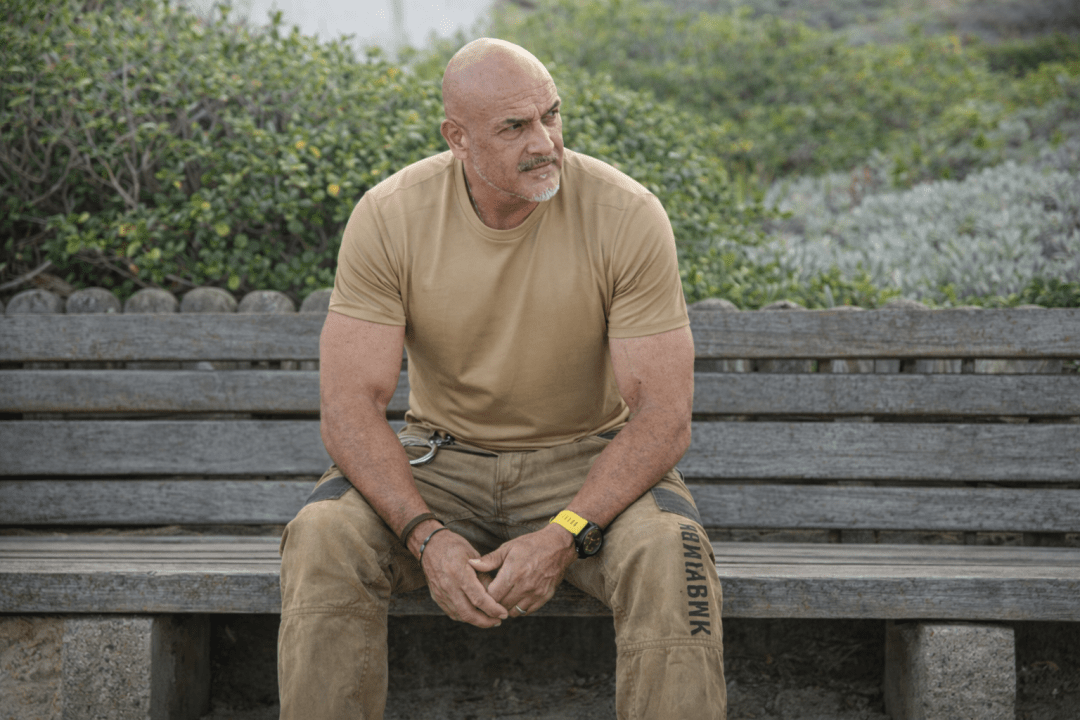
Bench Talk is a weekly series about the conversations men rarely have — but deeply need.
Each episode begins on the same bench, with different men, different battles, and the same quiet question:
Will you sit down… or will you walk past carrying it alone?
The bench was in the shade that afternoon.
Not the cold kind — the kind that feels like relief. I had been sitting there for a while, letting the day pass without asking anything from it, when I sensed someone standing close by.
Not looming.
Waiting.
There’s a sound a man makes when he isn’t sure if he’s welcome. A pause in the breath. A shift of weight. You learn to recognise it if you pay attention.
When I looked up, he was already there.
At first glance, he looked nearly my age. Over 50, maybe 60. His posture gave it away — shoulders rounded forward, head slightly bowed, like gravity had been winning for a long time.
But when our eyes met, that impression fell apart.
His face was young beneath the damage it carried.
Thirty, maybe. Skin still firm in places, but cut through with lines that didn’t belong there yet. Deep grooves ran from his nose to the corners of his mouth — not laughter, not age — endurance. The kind carved by clenching through nights that never really end.
His eyes were the hardest part.
Too alert.
Too awake.
Rimmed with a tiredness that doesn’t come from lack of sleep, but from carrying something that never gets set down.
Eyes that had learned survival, but forgotten rest.
Slung over one shoulder was a small, battered bag. Not luggage. Not a backpack. Something soft, collapsing in on itself. A bag that tells you immediately — whatever is inside it is everything he still owns.
“Hey… sorry,” he said quietly.
“Mind if I sit here for a bit?”
I slid over.
“Of course.”
He lowered himself onto the bench carefully, like even the wood might give way if he trusted it too much. He took the bag off his shoulder and placed it gently between his boots, adjusting it so it wouldn’t fall. The care he took with it said more than words ever could.
For a long while, neither of us spoke.
The ocean rolled in front of us. A gull cried somewhere overhead. Life moved on — steady, indifferent — while a man beside me gathered the courage to exist out loud.
Eventually, he opened the bag.
Inside were only a few things: a phone with a cracked screen, a neatly folded piece of clothing, and a bottle wrapped in brown paper. He held the bottle for a moment, turning it in his hand, like he was checking whether he still needed it.
Then he took a sip.
Small.
Measured.
“I used to have a good life,” he said.
Not dramatic.
Not bitter.
Just fact.
“I had a wife,” he continued. “And two boys. Twins.”
He reached into the bag again and pulled out the phone. When the screen lit his face, I saw the man he should have been — still there beneath the grief, not gone, just buried.
He turned the phone toward me.
Two boys, about ten years old. Same smile. Same eyes. Sunburned cheeks. Arms slung around each other like nothing could ever pull them apart. Behind them stood a woman — beautiful in a quiet, unforced way. Her hands rested easily on their shoulders. She looked safe. Loved.
“That,” he said, tapping the screen, “was happiness. I didn’t even know it then.”
He spoke about them slowly, carefully, like rushing might make them disappear. How the boys were always loud, always moving. How they fought constantly but defended each other without hesitation. How his wife laughed at the wrong moments and held his hand when they crossed the street, even when there were no cars.
I asked him what had happened to them.
Not abruptly.
Not pushing.
Just enough to let the question exist between us.
He didn’t answer right away.
His eyes stayed on the photo. His thumb traced the cracked screen, following the outline of his boys’ faces like muscle memory.
“They’re fine,” he said at last.
Then, quieter — almost like he was reminding himself — he added,
“Just on vacation.”
I nodded and let the words stay where they were.
There was something fragile in the way he said it. Not wrong. Not dishonest. Just necessary — like a thought you hold carefully because it’s the only thing keeping you upright.
I didn’t challenge it.
I didn’t correct him.
Some truths are too heavy to carry all at once.
So I let his words stand — not as denial, but as something that gave him a moment of peace.
Silence followed, gentle but full.
After a while, he lifted the bottle again.
This sip was longer.
Not greedy.
Not desperate.
Deliberate.
The bottle stayed at his lips a fraction too long. His throat moved as he swallowed… then moved again, without drinking. He just held it there, breathing through his nose, eyes fixed on nothing.
I asked him something — something small, meant to keep him here.
He didn’t hear it.
His eyes had already left the bench. Left the ocean. Left the present moment entirely.
They weren’t unfocused — they were locked. Fixed on a place only he could see. Like stepping into a room he’d avoided for years and finding it untouched.
Waiting.
His shoulders lifted with a breath that went too deep. Then dropped.
A tear formed in the corner of his eye. It clung there briefly before tracing a familiar path down his cheek — a line carved by repetition.
He didn’t wipe it away.
“She told me not to drive.”
The words came out quietly. Almost casually.
But his voice fractured — right on the word told. Like that was where the memory still lived. In her voice. In the way she said it.
“She said it was late,” he continued.
He stopped.
Not for effect.
For survival.
“Said the mountain pass was dangerous at night.”
Another pause.
Each sentence squeezed through a chest that seemed to narrow around the words.
“She said we could wait.”
His jaw tightened. Not anger. Shame. A muscle flickered beneath his eye.
“I said I was fine,” he whispered.
“I said I knew the road.”
His breathing shortened.
“The boys climbed into the back.”
Something softened then — just for a moment. A reflex. A father remembering.
“They were loud,” he said. “Laughing. Fighting over something stupid.”
Silence pressed in.
“I looked back at them,” he said.
“Just for a second.”
His hands began to shake — a fine tremor, like glass vibrating before it shatters. His shoulders folded inward, curling protectively around his chest.
“That’s when I heard her scream.”
He didn’t describe it.
He didn’t need to.
The scream existed between us. Heavy. Final.
“And then…”
He stopped. Tried again.
“And then they were gone.”
Gone.
Not dead.
Not killed.
Gone.
He leaned forward, elbows on his knees, head bowed. His leg shifted slightly and the small bag nudged against the bench — the quiet sound of everything he still owned moving against the ground.
“I don’t remember much after that,” he said. “Just noise. Lights. People talking but not saying anything.”
He shook his head slowly.
“The drinking started so I could sleep,” he said. “Then so I wouldn’t wake up.”
A pause.
“Then… just so I could sit still.”
He exhaled — a breath that sounded old.
“I lost the job first,” he said.
“Then the house.”
“Then I lost time.”
When he finally lifted his head, I asked something I should have asked earlier.
“What’s your name?”
He looked at me like the question surprised him.
“Daniel.”
“And your wife?” I asked.
A breath caught.
“Emma.”
“And the boys?”
His eyes closed briefly.
“Lucas and Noah.”
The names landed heavier than anything else he’d said.
Eventually, Daniel stood.
He lifted the bag — light enough to swing easily, heavy enough to carry a life.
“Do you need anything?” I asked.
He shook his head. Then stopped. Looked down at himself. Tugged gently at his shirt.
“This is the only one I’ve got,” he said.
“Could use a wash.”
That was all.
Not money.
Not food.
A clean shirt.
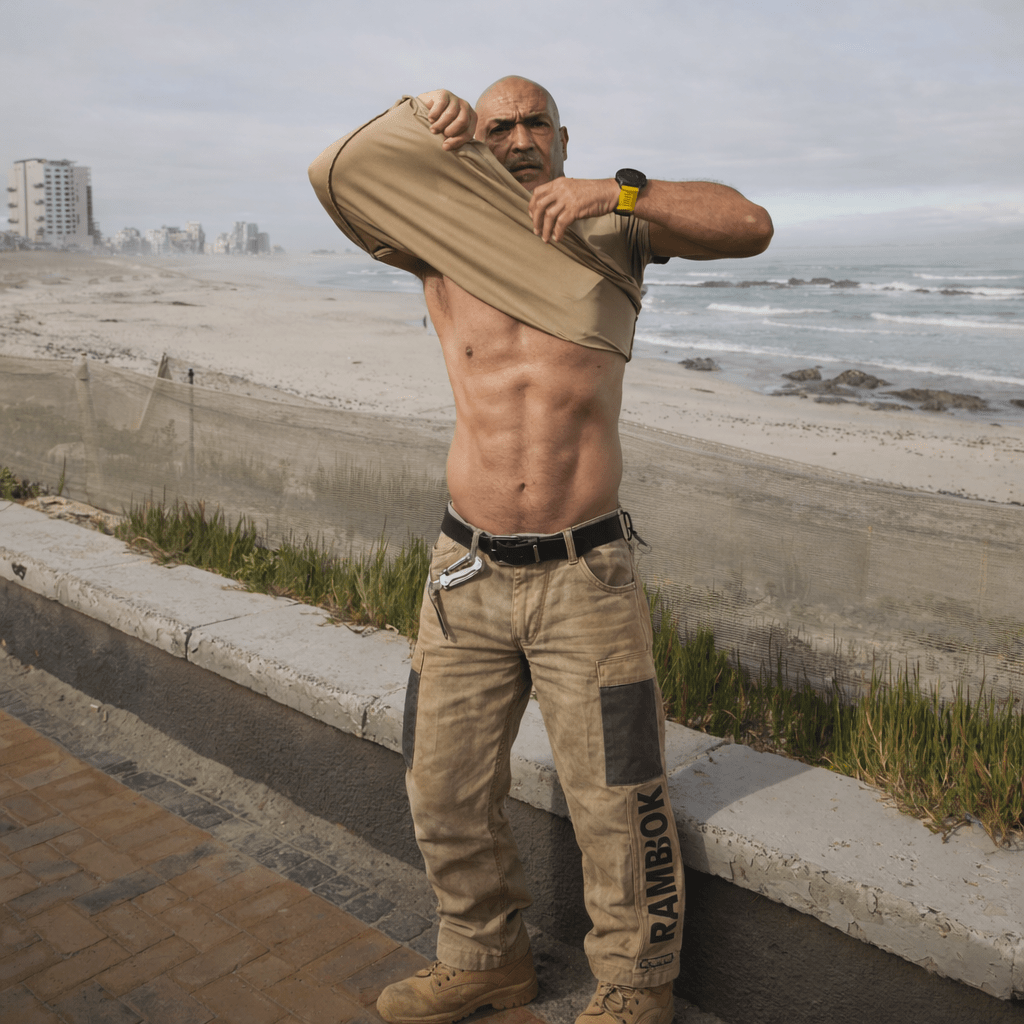
I stood and took mine off and handed it to him.
He froze.
He didn’t put it on right away. He held it against his chest for a moment, right over his heart, like he needed to feel it there first. Then he pulled it on. It hung loose — too clean, too full of another man’s life — like it belonged to someone who still had somewhere to go.
“Thank you,” Daniel said.
He didn’t say it like a man asking for sympathy.
He said it like a man who understood exactly what had been given — and how rarely that happens once you’ve lost everything.
No pride.
No drama.
Just gratitude. Clean. Undiluted.
He turned and walked away.
Not rushed.
Not dragging his feet.
Just steady — the way men walk when there’s nowhere specific to go, but they keep moving anyway.
The small bag bumped softly against his leg with each step. Everything he still owned, moving with him. My shirt caught the light as he walked — something ordinary, something replaceable — now carrying a meaning far bigger than the fabric it was made of.
It was just a shirt.
Something I hadn’t thought about that morning. Something I had more than one of. Something I could replace without consequence.
And yet, to him, it mattered more than it should have.
I stayed on the bench after he was gone.
Not frozen.
Not overwhelmed.
Just still.
Thinking about Emma.
Lucas.
Noah.
Thinking about how a man doesn’t stop being a husband or a father just because the people are gone. Love doesn’t shut off. It just has nowhere to land anymore.
Thinking about how young Daniel really was — and how grief had aged him in a way time never could.
Thinking about how one night — one decision made with confidence instead of humility — can quietly redraw an entire future.
Eventually, I stood.
I felt the weight of my body. The steadiness of my breath. The simple fact that I could walk back into a life that was still intact.
Before I left, I bowed my head slightly.
Not for anyone else to see.
“Thank you, God,” I said quietly.
“For what I still have. For what I forget to notice.”
Then, softer still:
“Please look after Daniel.
Give him rest — even if only for tonight.
Keep him safe.
And let him feel, even briefly, that he hasn’t been abandoned.”
I didn’t ask for miracles.
Just mercy.
When I walked away, the world carried on as it always does — traffic, voices, movement — but I wasn’t the same.
Gratitude isn’t loud.
It doesn’t announce itself to anyone.
Sometimes it arrives quietly — sitting next to you on a bench — and reminds you how much you’re carrying without ever noticing.
That day, a man walked away with my shirt.
And I walked away with something heavier — and far more valuable.
And that’s where episode 2 ends.
Not with answers. Not with closure.
Just with a man standing up from a bench, carrying a little more gratitude than he arrived with.
If this story did anything, I hope it slowed you down for a moment.
I hope it reminded you how thin the line is between having and losing.
How much of life rests on small decisions made in ordinary moments.
And how much we still have—right now—if we’re awake enough to notice it.
Take care of what’s been entrusted to you.
Your people. Your choices. Your time.
And when you can, be the man who stays.
Who listens.
Who gives—even if it’s just a shirt.
That’s how lives are changed.
Quietly.
On a bench.
Gert Louw

 gertlouw
Hallo Gert,W
LikeLike
Jis Pieter – thanks vir jou comment maat. Regtig waardeur die feedback!
LikeLike
What a story Gert! What a story.
LikeLike
Pieter – truly appreciate your feedback mate – thanks!
LikeLike